The Expat's Complete Guide to the Italian Healthcare System (SSN)
Moving to Italy involves adopting a whole new way of life—from embracing the profound coffee culture to navigating the intricate web of Italian bureaucracy. While aspects like finding housing and setting up a bank account are often top priorities for expats, understanding how to access medical care is arguably the most crucial step of your relocation journey. Fortunately, Italy boasts one of the most highly-rated, robust, and accessible public healthcare systems in the entire world, officially known as the Servizio Sanitario Nazionale (SSN).
Founded on the principles of universal coverage, the SSN provides comprehensive medical care to all citizens and legal residents, regardless of their income level. However, accessing this system as a newly arrived foreigner can feel like deciphering an ancient code. Between terms like ASL, Medico di Base, and the almighty Tessera Sanitaria, it is easy to get lost. This comprehensive guide will break down exactly how the Italian healthcare system works, how to register for it, and what you need to know in case of an emergency.
1. Understanding the SSN and Regional Differences
The Italian Servizio Sanitario Nazionale is heavily decentralized. While the Ministry of Health in Rome sets the national standards and general objectives, the actual administration, funding, and delivery of healthcare are handled by Italy's 20 regional governments. This means the healthcare experience in Lombardy (Milan) can feel structurally different from the experience in Sicily or Campania.
At the local level, healthcare is managed by Local Health Authorities, commonly referred to as the ASL (Azienda Sanitaria Locale), though the acronym changes depending on the region (for example, in Lombardy, it is known as ATS - Agenzia di Tutela della Salute). Your local ASL/ATS office is the bureaucratic heart of your healthcare journey; it is where you will register for the system, choose your doctor, and request specialist referrals.
2. Registration: Mandatory vs. Voluntary
As an expat in Italy, your path to entering the SSN depends entirely on your residency status and your reason for being in the country. Registration falls into two distinct categories: Mandatory (Iscrizione Obbligatoria) and Voluntary (Iscrizione Volontaria).
Mandatory Registration (Free of Charge)
If you are residing in Italy with a regular employment contract, are self-employed with a VAT number (Partita IVA), or are a dependent family member of someone working in Italy, you have the legal right—and obligation—to register with the SSN for free. To register mandatorily, you must visit your local ASL office with the following documents:
- Permesso di Soggiorno: Your valid residence permit (or the postal receipt proving you have applied/renewed it).
- Codice Fiscale: Your official Italian tax identification number.
- Certificato di Residenza: Proof of your official residency, or a self-declaration (autocertificazione) of your current living address.
- Proof of Employment: A copy of your employment contract, recent payslips (busta paga), or your Partita IVA documentation.
Voluntary Registration (Paid Subscription)
If you do not fall into the mandatory categories—for instance, if you are an international student, an au pair, or living on an elective residency visa—you cannot join for free. However, you can opt for Voluntary Registration. This requires paying an annual fee, which is calculated based on your income from the previous year. For students, this fee is often a flat, heavily subsidized rate (usually around €150-€700 annually, depending on recent regional updates). Once paid, you receive the exact same comprehensive coverage as mandatory members.
3. The Power of the Tessera Sanitaria
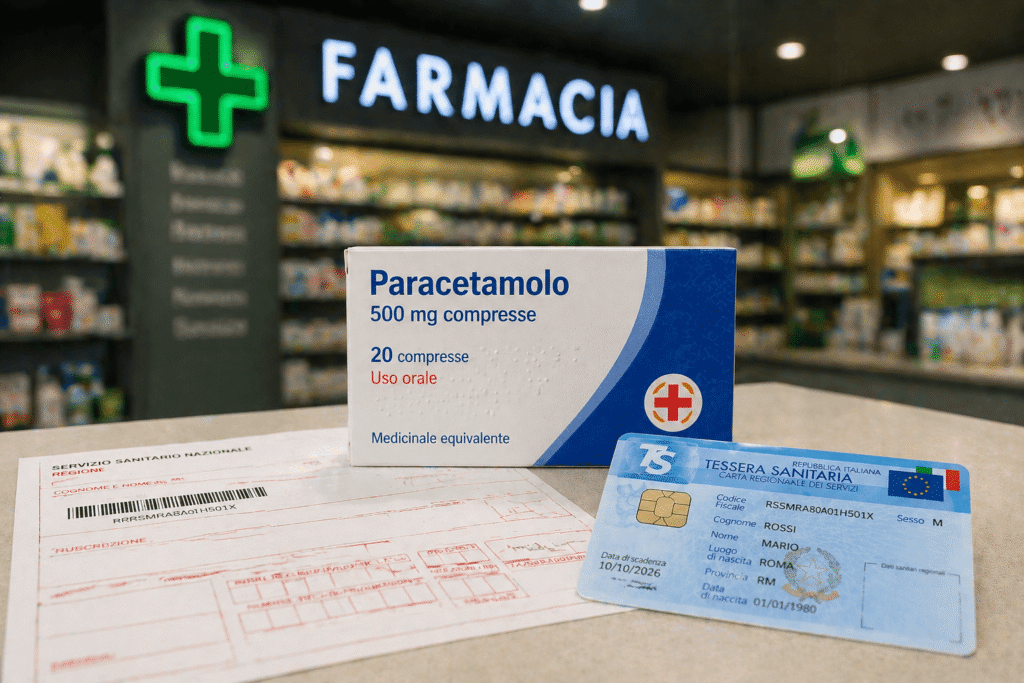
Once you successfully register at the ASL, you will be issued your physical health card: the Tessera Sanitaria (TS). This blue, credit-card-sized piece of plastic is incredibly important. It contains your name, date of birth, Codice Fiscale, and a magnetic strip/microchip.
You must carry your Tessera Sanitaria with you at all times. You will need it to book medical appointments, purchase prescription medications at the pharmacy, and even buy over-the-counter drugs. When you present your TS at a pharmacy, the costs of your medications are digitally linked to your tax profile, allowing you to claim a percentage of your medical expenses as a tax deduction (detrazione fiscale) at the end of the financial year.
European Coverage (EHIC)
The back of your Tessera Sanitaria doubles as the European Health Insurance Card (TEAM - Tessera Europea di Assicurazione Malattia). This grants you access to state-provided healthcare during temporary stays in any of the 27 EU countries, as well as Switzerland, Norway, Iceland, and Liechtenstein, under the same conditions as locals in that country.
4. The Medico di Base (Family Doctor)
The cornerstone of your daily healthcare in Italy is your family doctor, known formally as the Medico di Medicina Generale or simply the Medico di Base. During your registration at the ASL, you will be presented with a list of available doctors in your postal code area and asked to choose one.
Your Medico di Base is your first point of contact for any non-emergency medical issue. They will assess your symptoms, prescribe medications, issue sick leave certificates for your employer (Certificato di Malattia), and, most importantly, provide referrals for specialized care. You cannot simply book a public appointment with a cardiologist or dermatologist on your own; you must first see your Medico di Base to obtain a prescription referral (formerly a "red slip" or ricetta rossa, now largely digitalized as a ricetta elettronica).
If you are unhappy with your chosen doctor, you have the absolute right to change them at any time, either by visiting the ASL or, in many regions, by logging into your region's digital health portal using your SPID (Sistema Pubblico di Identità Digitale).
5. Navigating Emergencies: Pronto Soccorso
In the event of a severe medical emergency, you should dial 112 (the European emergency number) or 118 (the direct Italian medical emergency line). Dispatchers can often connect you with English-speaking operators.
If you need urgent care but do not require an ambulance, you can go directly to the emergency room at the nearest public hospital, known as the Pronto Soccorso. Italy operates on a strict triage color-coding system to prioritize patients based on the severity of their condition, not by their time of arrival:
- Red Code (Codice Rosso): Immediate, life-threatening emergency. Access is instant.
- Orange/Yellow Code (Codice Arancione/Giallo): Urgent situation, severe risk. Fast-tracked for care.
- Green/Light Blue Code (Codice Verde/Azzurro): Minor injuries or illnesses. Be prepared for a very long wait (sometimes 4 to 8 hours).
- White Code (Codice Bianco): Non-urgent issue that should have been handled by a Medico di Base. If you are assigned a white code, you will wait the longest and may be required to pay a fee (ticket) upon discharge.
Out of Hours: La Guardia Medica
If you fall ill during the night, on a weekend, or during a public holiday when your Medico di Base is closed, you should not go to the Pronto Soccorso unless it is an emergency. Instead, you contact the Guardia Medica (Continuità Assistenziale). This is an after-hours doctor service that can provide consultations, prescribe urgent medications, and even conduct home visits.
6. Specialists and The "Ticket"
While the SSN is generally "free," there is a co-payment system in place for diagnostic tests (like blood tests or X-rays) and specialist visits within the public system. This co-payment is called the Ticket Sanitario.
When your Medico di Base prescribes a specialist visit, you must book it through the centralized booking center (CUP - Centro Unico di Prenotazione). Before your appointment, you will pay the "Ticket" (usually ranging from €15 to €40, depending on the exam and region). Exemptions to the Ticket exist for pregnant women, children under a certain age, seniors, patients with chronic illnesses, and those with a very low official household income (calculated via the ISEE).